Most people never think about what holds their deck up until something feels off. A railing gives a little. The stairs bounce. Or you're buying a house and the deck out back looks older than the listing photos made it seem. A deck safety check answers the simple question: is this thing sound?
Kannapolis Deck Pros connects you with a local deck builder who will come out and look your deck over, top to bottom. Call (980) 499-7770 or request a free quote to set it up.
What this is, and what it isn't
This is a builder's safety check. Someone who frames and repairs decks for a living gets under yours, probes the wood, pushes on the rails and tells you plainly what they find.
It is not a city or county code inspection. Those happen during permitted work, when an inspector signs off on footings, framing and the final build. It's also not a full home inspection or an engineer's report. If you're in the middle of a home sale and your lender or agent needs a specific report, ask them what they require. A builder's check is still useful in a sale, because it tells you what a repair would actually involve.
When to get one
- Buying a house. Home inspectors look at decks, but often briefly. A builder can tell you what the repairs would cost before you negotiate.
- Selling a house. Better to find the loose rail or rotted stair before the buyer's inspector does.
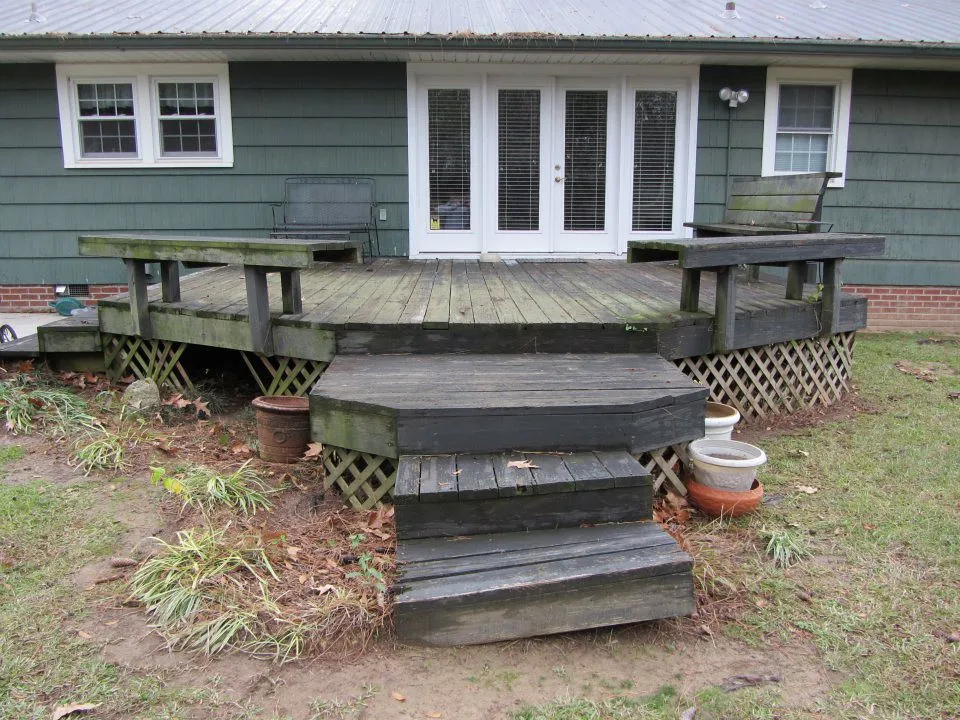
- The deck is old. Many decks around Kannapolis, especially behind the older mill houses, were added years ago by a previous owner, sometimes without a permit.
- Before adding weight. Planning a hot tub, a roof, a pergola or a screened porch? Find out if the frame can carry it first.
- After a storm or a fallen limb. Even if the boards look fine, a hit can crack a beam or loosen a post.
- Something just feels wrong. Bounce, sway, a soft spot or a gap at the house.
What gets checked
The ledger and flashing
The ledger is the board that attaches the deck to your house, and it's the connection that matters most. The builder looks at how it's fastened (bolts or lag screws, not just nails), whether there's flashing above it to keep water out, and whether the wood behind it is soft. Rot here can spread into the house's rim joist.
Footings and posts
Are the posts sitting on real footings or on blocks set on the dirt? Are the post bottoms soft? Is anything leaning or settling? Posts buried directly in the ground are a common rot spot in our wet clay.
Beams, joists and hardware
The builder checks for rot, cracked or sagging joists, and joist hangers that are rusted or missing nails. Hardware not rated for treated lumber corrodes, and a rusted hanger can look fine until it isn't.
Railings
Every rail post gets a firm push. Railings should feel solid with no give. The builder also looks at height and baluster spacing, since older decks were often built with gaps a small child could slip through.
Stairs
Stringers, treads, the landing at the bottom and the handrail. Stairs sit closest to wet ground and often fail first.
Boards and surface
Soft spots, splits, popped screws and nails, and areas where water sits.
What you get afterward
You get a plain explanation of what was found, ideally with photos of the problem spots so you can see what the builder saw. Then one of three answers:
- It's in good shape. Maybe some cleaning and sealing to keep it that way.
- It needs repair. Specific fixes, like new hangers, a reflashed ledger, a rail post or new stair stringers, with a written quote. See deck repair for what that work involves.
- It's time to replace it. When the ledger, footings or joists are too far gone, putting money into repairs doesn't make sense. The deck replacement page explains what comes next.
You decide what to do. The builder shouldn't push work the deck doesn't need. Want to know what a repair or replacement might run? The deck cost guide covers what sets the price.
Why it matters here
Kannapolis summers are hot and humid, and spring brings pollen that packs into board gaps and holds moisture. Water is what kills decks, and it works slowly in places you don't look, like behind the ledger and at the bottom of posts. A deck can look fine from the patio chairs and still have real problems underneath.
The builder covers Kannapolis and nearby Concord, Landis, Rockwell and Salisbury.
Questions people ask
Is this the same as a city inspection?
No. A code inspection is done by the local building inspector when work is permitted. This is a deck builder's safety check of an existing deck, so you know its condition and what it needs.
How often should a deck be inspected?
A good rule is to have an older deck looked at every few years, and any deck checked if something feels loose or soft. It's also smart before a home sale or before adding a roof, hot tub or other heavy load.
How long does a deck inspection take?
Most take well under an hour for a typical deck. Large, tall or multi-level decks take longer because there's more framing to look at.
Can a deck look fine and still be unsafe?
Yes. The most serious problems, like rot behind the ledger or rusted hangers, are hidden under the deck or behind the boards. That's why the check includes getting underneath, not just walking across the top.
Will the inspection count for my home sale?
That depends on what your buyer, lender or agent needs. A builder's check gives you a clear picture of condition and repair costs, but it isn't a licensed home inspection. Ask your agent what report is required.