Plenty of folks in Kannapolis call about a roof over the deck and end up happier with a pergola. They wanted afternoon shade and somewhere to hang lights. They didn't need to stay dry in a downpour, and they didn't want to lose the light in the kitchen window. A pergola does the first two and skips the rest.
Kannapolis Deck Pros connects you with a local builder who designs and builds pergolas on new decks, existing decks and ground-level patios. Call (980) 499-7770 or request a free quote to set up an on-site visit.
Pergola or roof? Start with this question
Ask yourself what keeps you off the deck now.
- Too hot in the afternoon? A pergola cuts the direct sun and makes the space usable earlier in the evening.
- Rain ruins plans? An open pergola won't help. A louvered pergola can, or a solid roof will. See covered decks and porches for that route.
- Bugs? Neither a pergola nor an open roof stops mosquitoes. That's a screened porch.
- The space feels bare? A pergola gives an open deck edges and a ceiling, even without full cover.
If shade and looks are the goal, a pergola is usually the less expensive answer.
Sizing a pergola for a Kannapolis yard
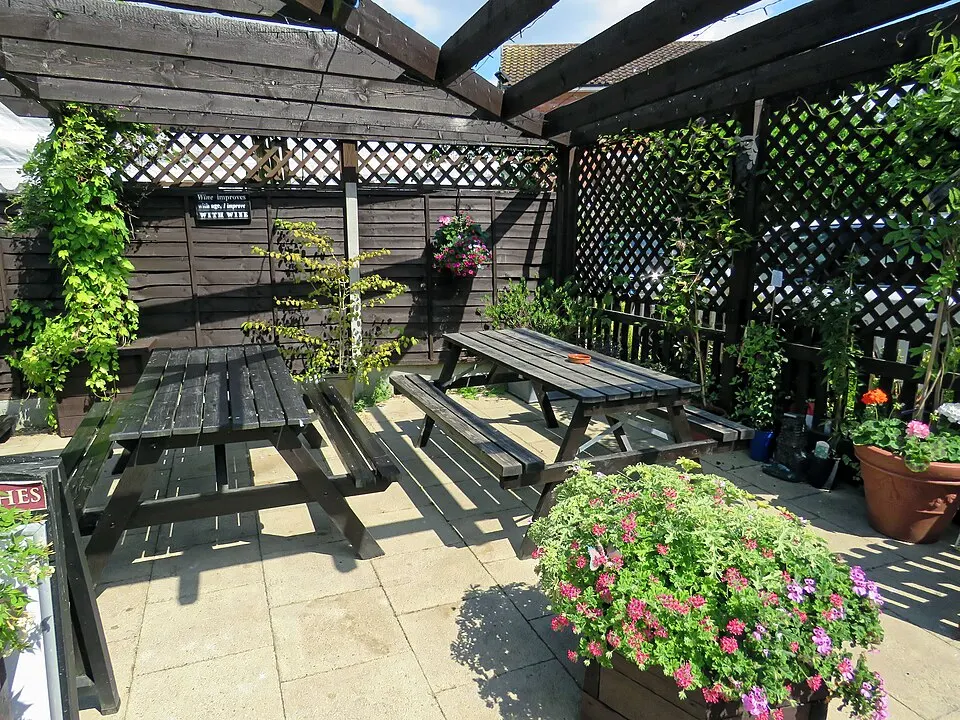
Kannapolis backyards come in two sizes. The older Cannon Mills houses have narrow lots and small back porches. A big pergola there can swallow the yard and crowd the neighbor's fence line. A smaller pergola over one end of the deck, just big enough for a table and four chairs, often fits better.
The newer subdivisions toward Concord and Harrisburg have bigger yards and higher back doors. There, a pergola might cover a dining area on the deck, sit over a hot tub, or stand out on a paver patio near a fire pit.
A few sizing rules of thumb a good builder will walk through with you:
- Cover the furniture, not the whole deck. Shade where you sit matters more than square footage.
- Mind the height. Too low feels cramped. Too high and the shade lands somewhere else by late afternoon.
- Watch the windows and gutters. An attached pergola shouldn't block a window or sit where the roof dumps water.
Wood, aluminum or louvered
Pressure-treated pine is the budget-friendly pick and the most common in town. It can be stained to match the deck. Expect some twisting and checking as the big beams dry out, and plan on cleaning and staining every couple of years, same as a wood deck.
Aluminum pergolas are pre-engineered kits or systems with a powder-coated finish. No staining, no rot, and the beams stay straight. They cost more up front and have a cleaner, more modern look.
Louvered pergolas are usually aluminum with roof slats that tilt. Open them for sun and breeze. Close them and they shed rain into a built-in gutter. Some are crank-operated, some have a motor. They cost the most of the three and are the closest a pergola gets to a real roof. Motorized versions need power run to them, which means an electrician.
Putting a pergola on an existing deck
This is where most pergola problems come from. A post screwed onto the top of the deck boards has nothing holding it straight except a few screws in soft decking. Give it a windy afternoon and it starts to rock.
A solid pergola on a deck has posts that either run down to their own footings in the ground or bolt into framing built to hold them. On an existing deck, that can mean adding footings beside or under the deck and threading posts through. The builder checks the deck's framing and condition first. If the deck is near the end of its life, it makes more sense to deal with that before adding anything on top. The deck replacement page explains how that decision gets made.
If you're building a new deck and a pergola is on your wish list, say so at the estimate. Footings planned for it now are far cheaper than retrofitting later.
What drives the price
- Size, and how many posts and footings it needs
- Material: pine, cedar, aluminum or a louvered system
- Attached to the house or freestanding
- On an existing deck (often extra footing work) or a patio
- Add-ons like shade cloth, a retractable canopy, lighting or a motor
For how a written quote should break those out, see the deck cost guide.
What to ask before you hire
- Where does each post land, and what's holding it?
- If it attaches to my house, how is that connection flashed?
- Which way do the rafters run, and where will the shade fall at 5 p.m.?
- Does it need a permit? If so, who pulls it?
- What upkeep does this material need?
Some pergolas need a permit and some don't, depending on size and how they attach. The contractor checks and pulls the permit when one is required, and NC811 is called before any footing holes are dug. The builder covers Kannapolis, China Grove, Landis and Concord.
Questions people ask
Is a pergola cheaper than a covered deck?
In most cases, yes. A pergola has no roofing, flashing into the house roof or gutters, so it's a smaller build. A louvered aluminum pergola narrows the gap, since the system itself costs more.
Can I hang a swing or string lights from a pergola?
String lights, yes. A swing puts a lot of moving weight on the beams, so tell the builder before the pergola is designed. The beams and connections need to be sized for it.
Will a pergola keep pine pollen off the deck?
No. An open pergola lets pollen, leaves and rain through. A closed louvered roof or a solid roof cuts down on what lands on the deck.
How long does it take to build a pergola?
A wood pergola on a patio often takes a few days of work. Adding footings through an existing deck, a louvered system or electrical work adds time. Your written quote should include a realistic schedule.