There's a reason pressure-treated pine is the most common deck wood around Kannapolis. It's strong, available, easy to repair and it keeps the price of a good deck within reach. Built right and cared for, a wood deck gives you years of cookouts and evenings outside.
Wood deck construction in Kannapolis
A wood deck is built from the footings up. Most use pressure-treated pine for both the framing and the walking surface. Some homeowners choose a different wood for the boards, like cedar, for its look. Talk through the trade-offs at the estimate.
Pressure-treated pine usually has the lowest upfront price of any decking material. What a given deck costs comes down to its size, height, stairs and railing style.
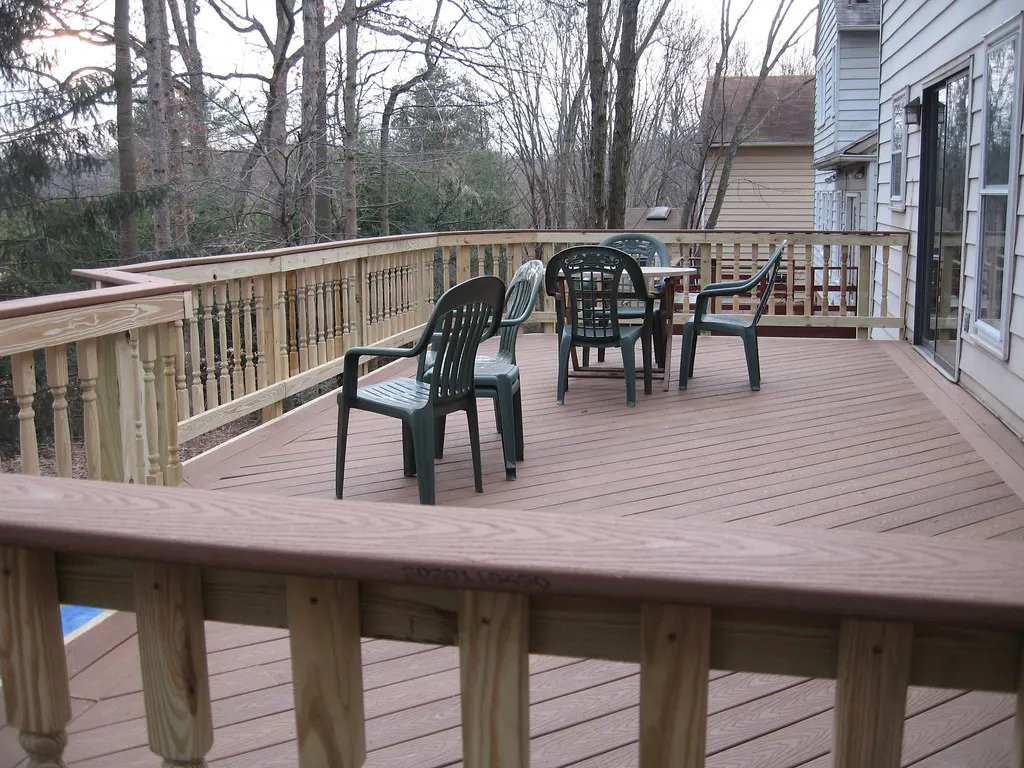
Why wood still makes sense
- Lower upfront cost. You can often get a bigger deck for the same budget compared to composite.
- Easy repairs. A bad board can be swapped in an afternoon with lumber from any supply yard.
- Cooler underfoot. Wood typically stays cooler than dark composite in strong afternoon sun.
- Classic look. Some houses, especially older mill houses, just look right with a wood deck.
The honest downsides
Wood needs attention, and our climate makes that more true:
- Sealing. Plan to clean and seal or stain every couple of years. Skip it and the boards gray, check and cup.
- Moisture. Hot, humid summers and frequent rain keep wood damp. That's what leads to rot over time.
- Splinters. Weathered wood can splinter, which matters with kids and bare feet.
- Pollen. Rough wood grabs pine pollen. It washes off, but it takes more effort than composite.
If that upkeep sounds like more than you want, read about composite decks. If you're fine with a maintenance weekend every other year, wood is a solid choice.
How a wood deck should be built to last here
The difference between a wood deck that lasts and one that rots early is mostly in the details:
- Proper footings. Set at the right depth and size. NC811 is called before digging so utility lines are marked.
- Flashed ledger. The connection to the house is bolted and flashed so water can't sit behind it.
- Ground-contact lumber where needed. Posts and low framing near the soil get lumber rated for that use.
- Joist tape. Protects the tops of joists from water that drips between boards.
- Board spacing and orientation. New treated lumber is often wet and shrinks as it dries. A good builder spaces boards with that in mind.
- Hardware rated for treated lumber. Treated wood is hard on standard fasteners and hangers.
Permits and inspections are usually required, and the contractor pulls them.
When to seal a new wood deck
New pressure-treated lumber often needs time to dry before it takes a stain or sealer well. A simple test: sprinkle some water on the boards. If it beads up, wait. If it soaks in, it's usually ready. Ask the builder for guidance at the walk-through.
After that first coat, a simple routine keeps a wood deck in good shape: sweep off pollen and leaves, rinse in spring and fall, and check for any boards that have popped or split.
What to ask about a wood deck quote
- What grade of lumber is being used for framing and decking?
- Are posts and low framing rated for ground contact?
- Is the ledger flashed, and how is it attached?
- Is joist tape included?
- Are stairs and railings included in the price?
Related services
If your current wood deck is showing soft boards or loose railings, start with deck repair. If the framing is too far gone, deck replacement may be the better call. For typical numbers on every option, see our deck cost guide.
Call (980) 324-2790 or request a free quote. The real price comes from a free on-site visit and a written quote.
Questions people ask
How long does a pressure-treated deck last?
It depends heavily on how it was built and maintained. Good flashing, joist protection, ventilation and regular sealing make a big difference in a humid climate like ours. Decks that are neglected tend to show rot much sooner.
How often should I seal my wood deck?
Plan on cleaning and sealing or staining about every two to three years, depending on sun exposure. Decks in full afternoon sun usually need it more often. If water stops beading on the boards, it's time.
Is cedar better than pressure-treated pine?
Cedar has a nice look and natural resistance to decay, but it costs more and is softer. Pressure-treated pine is stronger and more common locally. Many decks use treated framing either way. Ask for both prices at your estimate.
Can I switch to composite later?
Sometimes. If the framing is sound and spaced tight enough, composite boards can replace wood later. Many older decks need added joists first. The builder can plan for that if you think you'll switch down the road.